
How a fully automated whole-home specification, from woven wood shades to exterior zip shades, comes together when the designer and the workroom are aligned from the start.
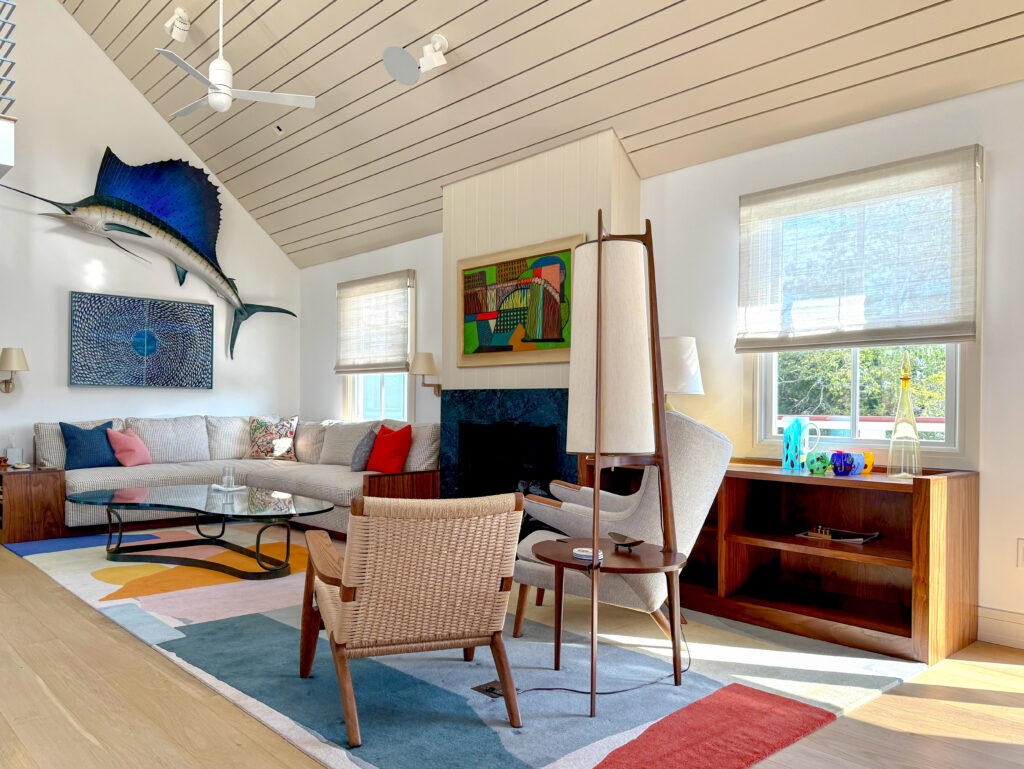
Cape May is one of those places that earns its reputation. The light is impactful, and the wind off the water is intense. In this beach house renovation, for a home situated a short walk from the beach and overlooking a nature preserve, every custom window treatment decision carries weight.
The project, a collaboration with Philadelphia-based interior design firm Michael Shannon Designs (MSD), asked us to consider the entire home at once. Not individual rooms in isolation, but a unified approach to light control, privacy, and home automation that would work casually, effortlessly, and without intervention, the way a beach house actually should.
Automated Woven Wood Shades in the Living Spaces
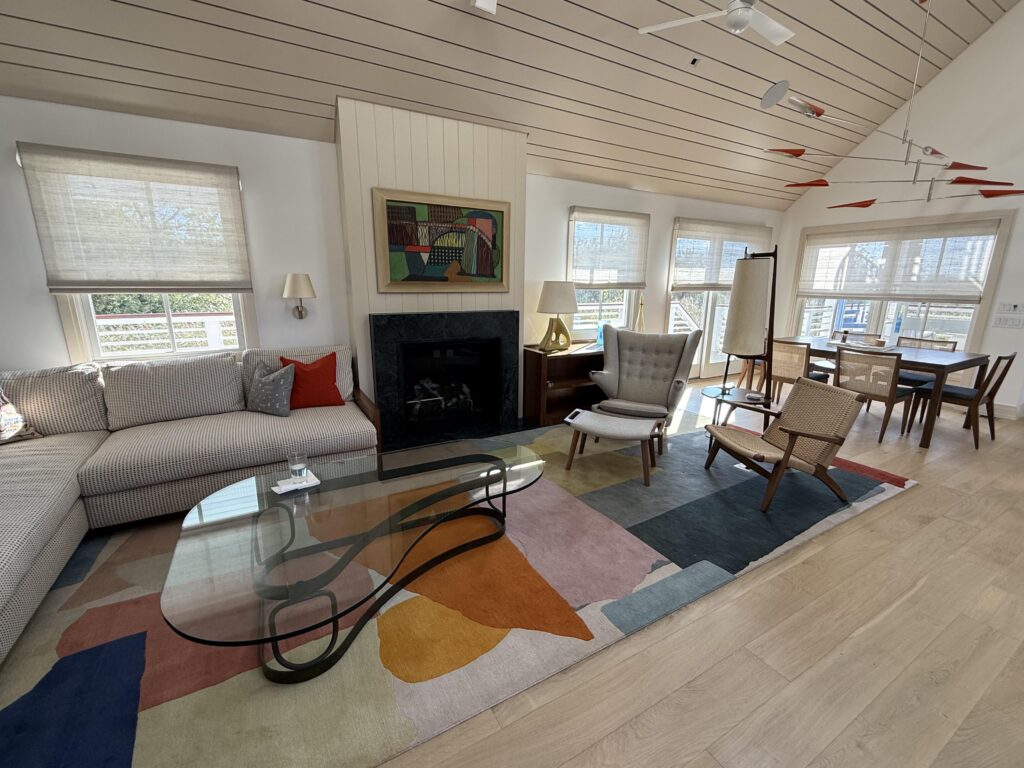
For the main living spaces, MSD specified Conrad woven wood shades in Moondust. A natural, textural material that suits the coastal setting without being literal about it.
All of them are automated, and that decision matters more than it might seem. Natural woven materials benefit from minimal handling. Repeated pulling and adjusting stresses the weave over time and causes uneven wear. Automation removes that entirely. The shades move at the push of a button, the fabric is never touched, and the treatment looks as considered five years from now as it does today. For luxury interior designers specifying natural shades, window treatment automation is not an upgrade. It’s the right call.
Top-Down Bottom-Up Cellular Shades for Light Control and Privacy
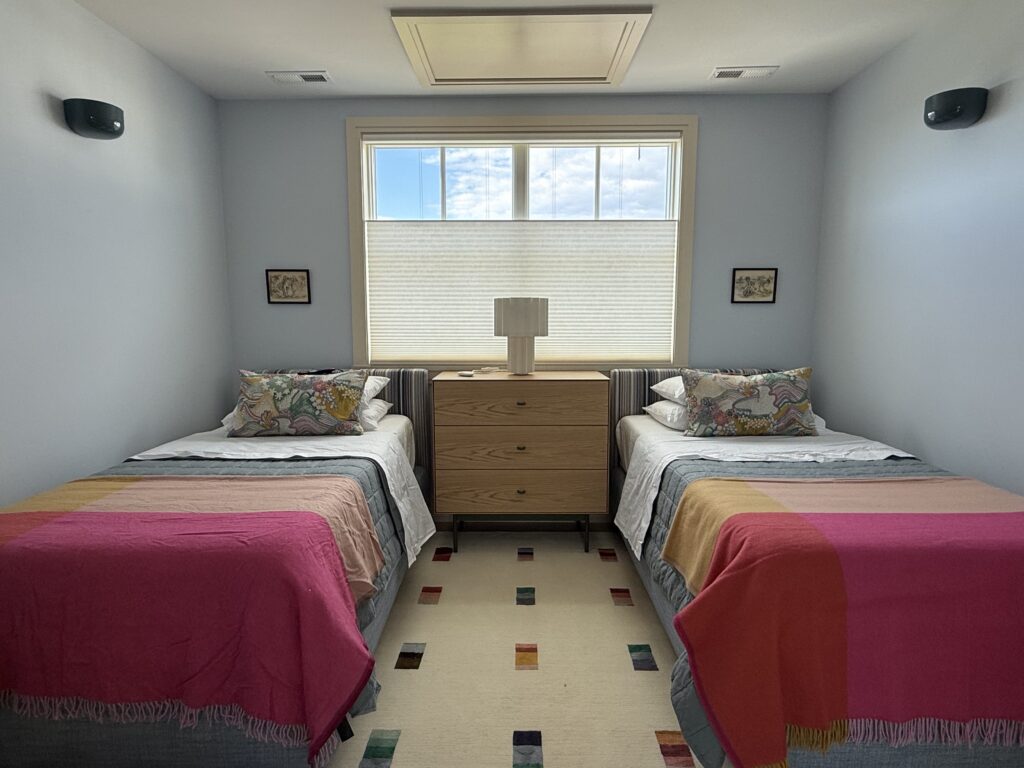
Every bedroom in the home received Hunter Douglas Duette cellular shades, hardwired and automated throughout. The detail that does the most work here is top-down, bottom-up operation. In a beach house where homes sit close together and the sun comes in early, top-down, bottom-up shades give homeowners both light and privacy at the same time, with the sky visible from the top and privacy maintained at eye level.
The Duette’s honeycomb cell construction also provides meaningful insulation at the glass, trapping air and reducing heat transfer in both directions. For a home that sees warm summer days and cool shoulder-season weekends, that energy efficiency adds real comfort and long-term value.
In the primary bedroom, the sliding glass door received a Hunter Douglas Duette Vertiglide shade, automated and hardwired. Where sliding doors at this level often get resolved with a vertical blind and forgotten, the Vertiglide delivers the same soft cellular texture as the windows, stacking cleanly to one side while keeping the primary suite cohesive from every angle.
Coordinating the hardwired power panels with the electrician ahead of installation was a significant part of what we managed behind the scenes. That kind of early trade coordination is where whole-home automated window treatment projects either go smoothly or don’t.
Exterior Automated Shades and the Sensor Worth Specifying for Coastal Homes
The porch is where this project gets technically interesting. We installed seven automated exterior zip shades through Crown Shade Company, one of our preferred vendors for precision exterior shading, based in Baltimore, Maryland. The zip track system locks fabric into side channels, eliminating flutter in coastal wind conditions. At 3% openness, the meadow view stays present while harsh glare is filtered. It is a clean architectural solution for an open-air living space that needs to perform year-round.
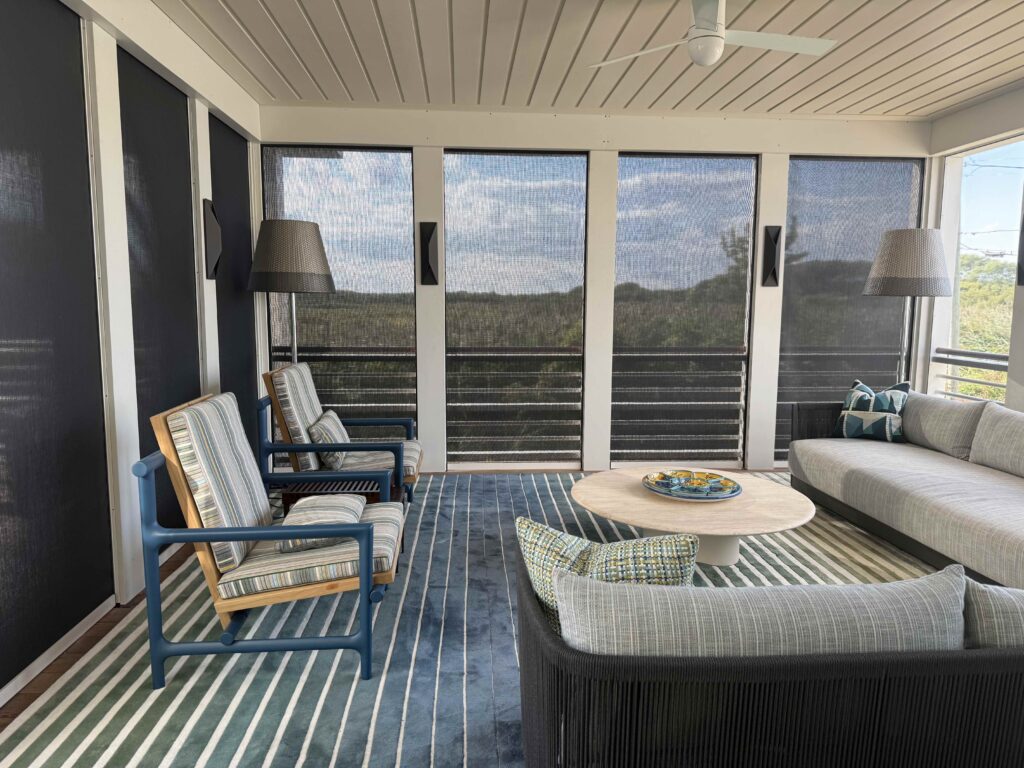
The entire system runs on Somfy high-voltage AC motors, but the component that makes this system genuinely smart for a coastal installation is the Somfy Soliris RTS sun and wind sensor.
When sunlight exceeds the set threshold, the shades descend automatically. When it drops, they retract after a variable delay designed to prevent constant movement on a partly cloudy day. The wind function is the critical one for a shore property: when wind speed exceeds the programmed threshold, the shades retract within two seconds, before fabric or hardware can be stressed. Manual override is always available.
For a client who is in and out all day, going to the beach and coming back, this is a automated outdoor shade system that handles itself. The shades are up when they should be up and down when they should be down. The view is protected. The furniture is protected. The investment is protected.
What a Long-Term Design Partnership Actually Produces
Projects like this one don’t happen by accident. We have been working with MSD for over five years and across nearly 20 projects together. That history means we understand how they work, what their clients expect, and how to spec and execute at the level their designs demands.
Michael Shannon and his team visited our Bucks County custom window treatment atelier for a private Lunch and Learn, where we walked through product systems, automation infrastructure, and early-stage trade coordination. That kind of alignment before a project starts is what makes the execution clean.
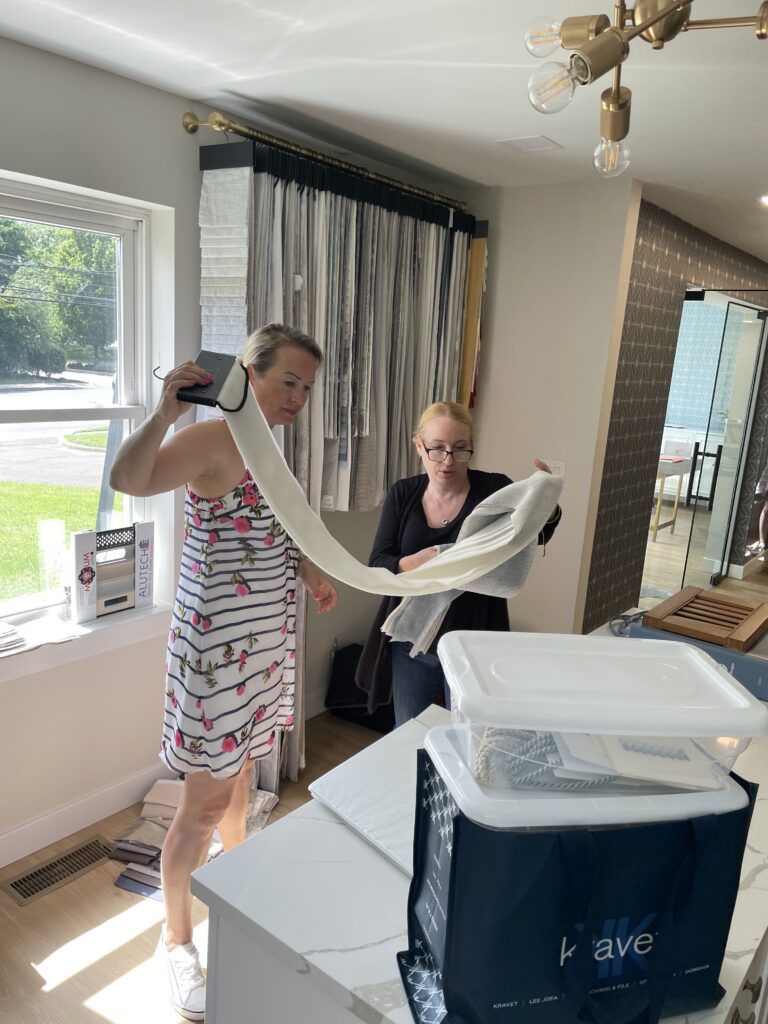
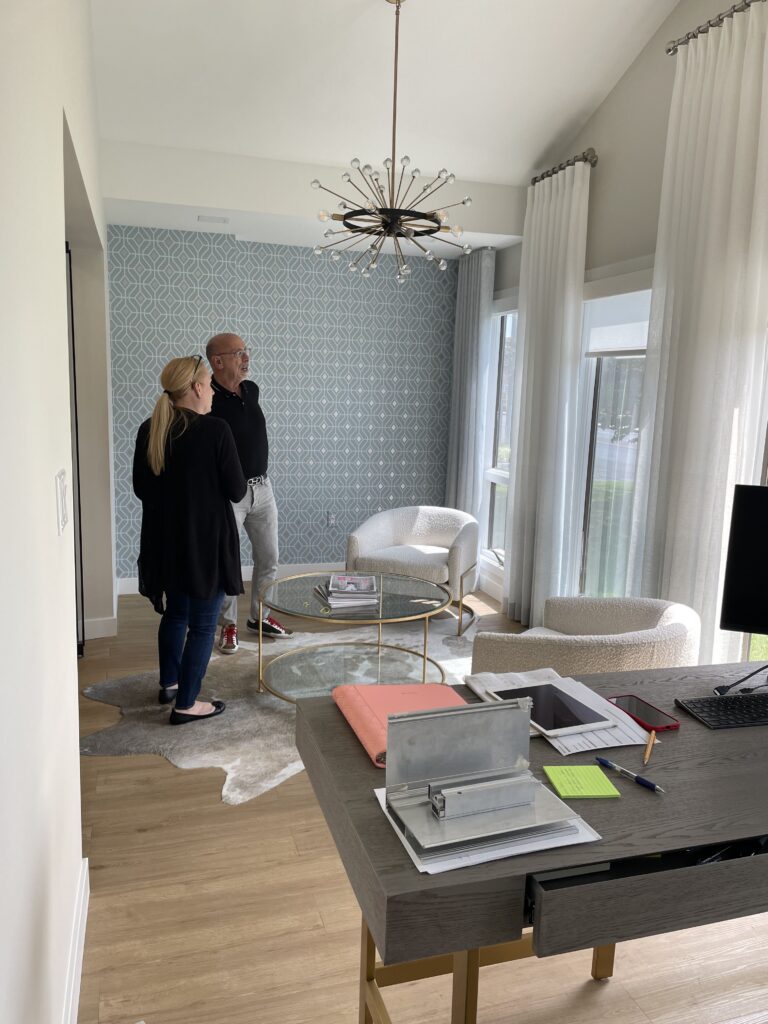
Michael Shannon and his team at our Bucks County atelier for a private Lunch and Learn, creating the kind of alignment that makes whole-home projects like this one go smoothly.
This Cape May home is a good example of how that collaboration can produce a fully considered whole-home window treatment solution, executed with innovation and precision, adding a finished look and profitable layer to your projects.
If you are a luxury interior designer working on a coastal project, a whole-home build, or any space that demands this level of coordination and precision, we would love to connect. Our Bucks County atelier offers private Lunch and Learn sessions for interior designers and architecture firms throughout the Philadelphia region and beyond, and we are currently welcoming new trade partners for upcoming projects.
Schedule your Lunch and Learn or inquire about a project today.

