
Earlier this year, I presented at the International Window Coverings Expo. IWCE brings together window treatment professionals from across the country, and preparing that presentation pushed me to look hard at what’s actually moving through our atelier right now. My research pulls from our own Vitalia Inc. orders, conversations with industry colleagues, High Point Trend Spotters, the BDNY Conference, Maison & Objet in Paris, and Kips Bay Decorator Showhouses. This is what that research, combined with what we’re executing every day in our Bucks County studio, actually looks like in practice.
Soft Architecture
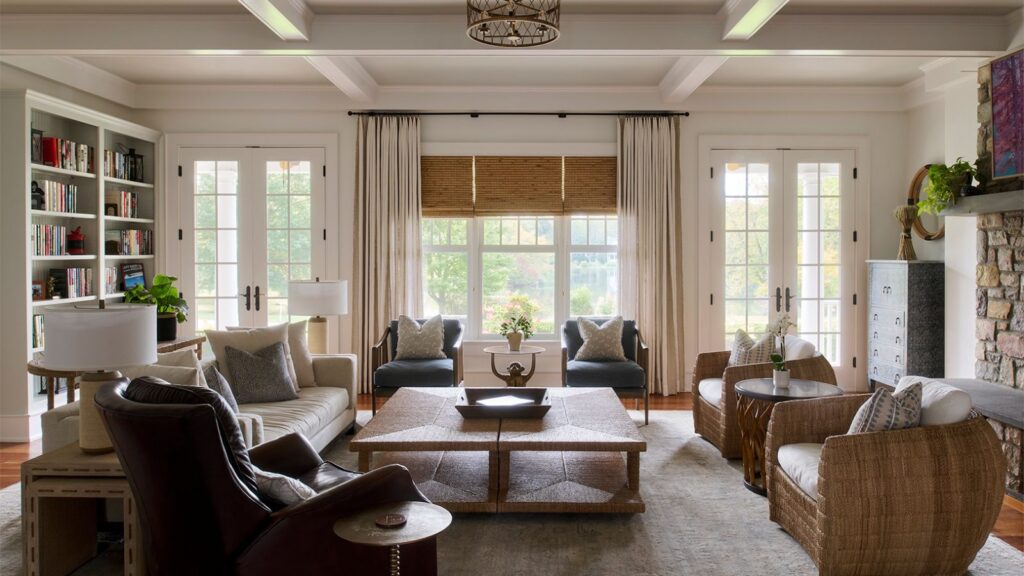
There’s a concept shaping everything in our industry right now. The industry is calling it Soft Architecture. Window treatments are no longer finishing touches. They’re structural design elements that define a room the way a wall does. Valances and cornices are being treated as architectural accents, not decorative additions. In their 2025 trend report, global trend forecasting agency WGSN stated, “Draperies are experiencing a significant resurgence, aligning with broader trends emphasizing comfort, personalization, and sensory-rich environments.” We’re seeing exactly that in our studio, and it’s changing how we talk with designers about specification from the very beginning of a project.
Familiar Color Palettes and Pattern
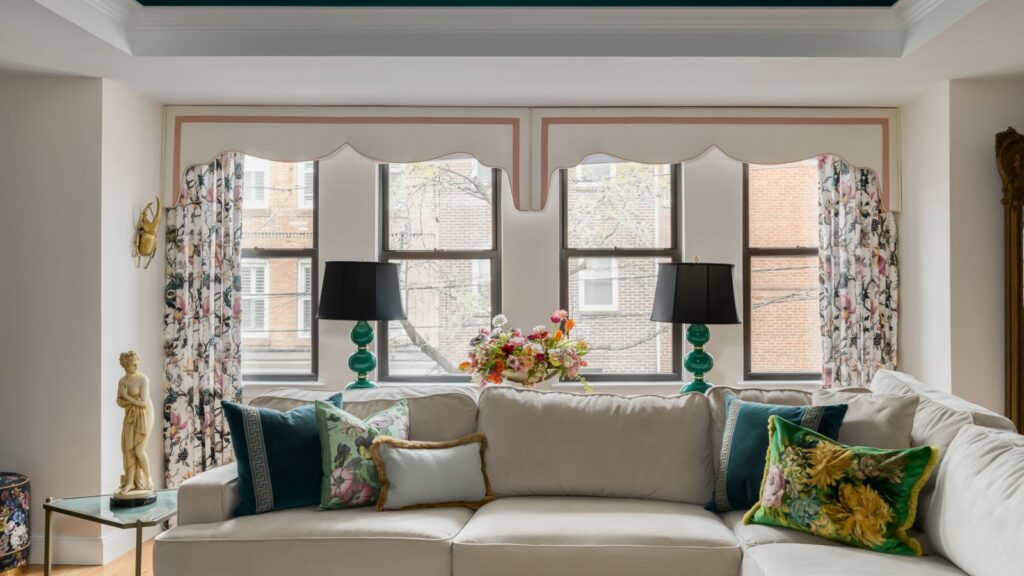
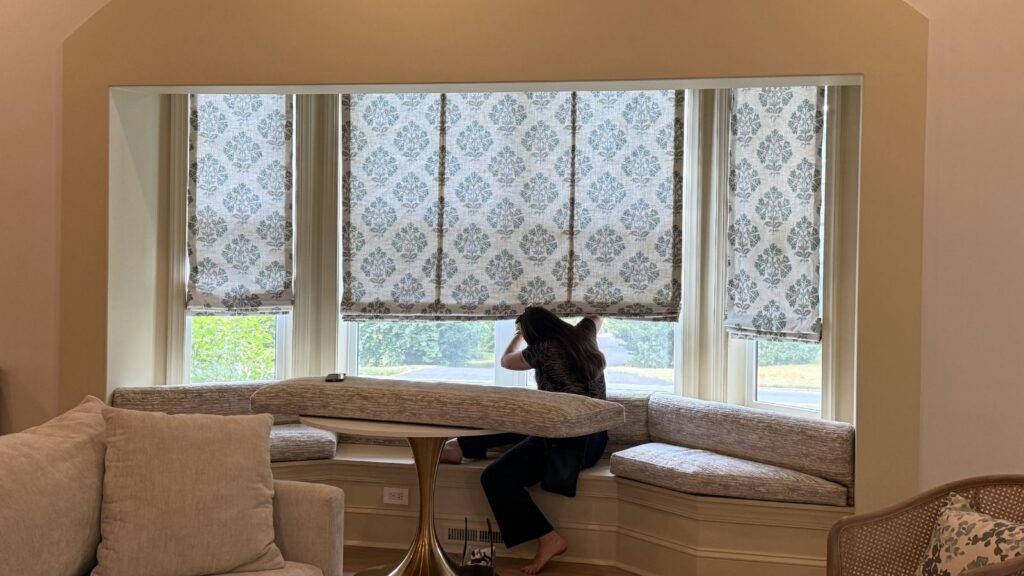
Warm, familiar palettes are back. Pattern is back with them. Pattern drenching, where a single print runs across drapery, walls, and soft goods in the same space, is one of the most requested approaches we’re executing right now. When it’s done well it reads as deeply cohesive. When it’s not, every misaligned repeat tells on itself across every window in the room. The five Roman shades in the bay window below are a good example of what that precision actually requires in practice. Every repeat has to align across every panel, every seam has to disappear, and the pattern has to read as one continuous story across the whole window.
Traditional Styles, Revisited
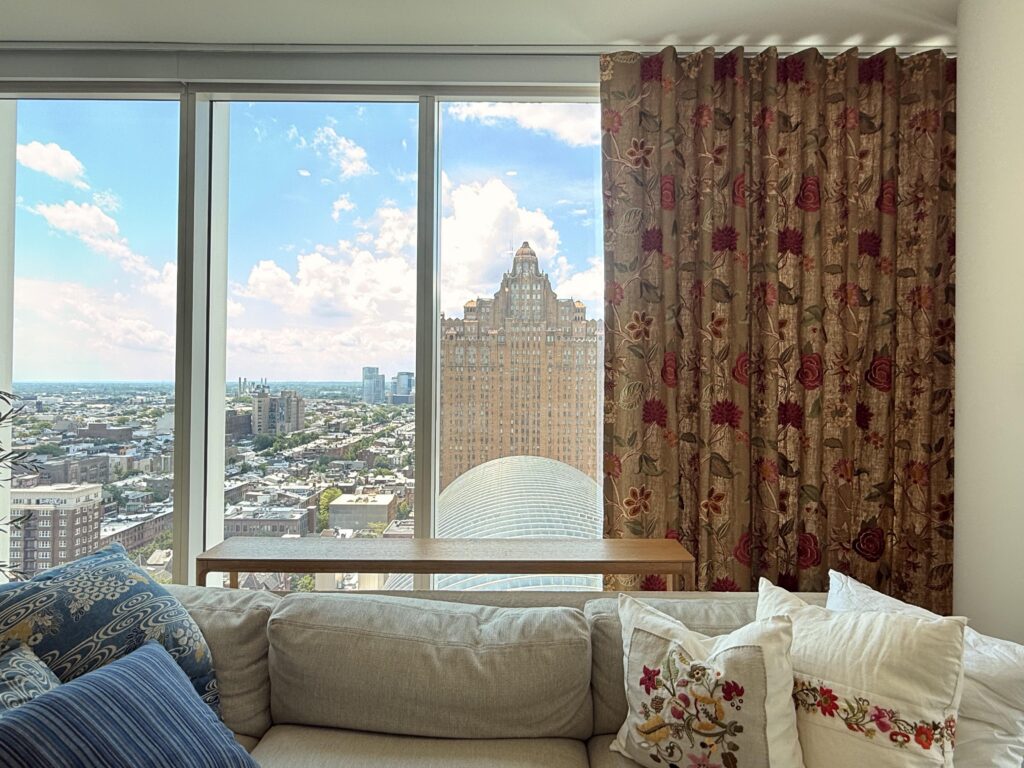
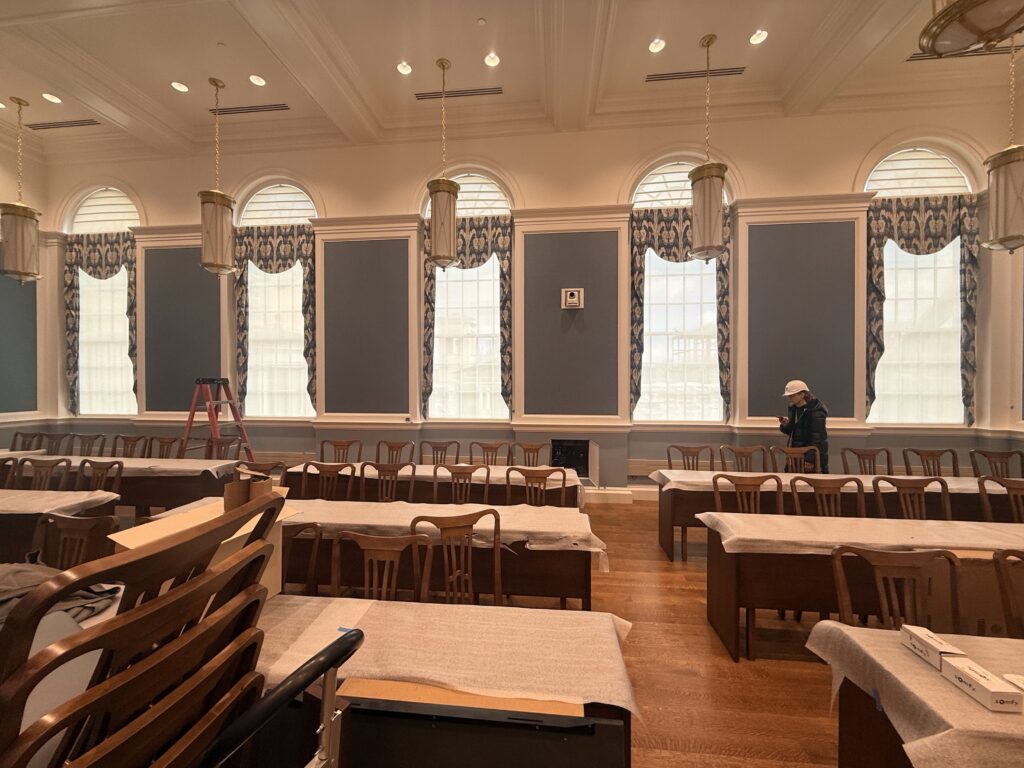
Are classic window treatment styles making a comeback? Absolutely, and with real purpose behind them. Café curtains, swag and cascade valances, pencil pleats. Designers are reaching for them because they bring something to a space that a clean minimal treatment simply cannot. We recently fabricated swag and cascade valances for a newly built wing at Hillsdale College in Michigan, designed by Barbara Eberlein. The valances are in a bold ikat-style print, installed across a formal hall with arch windows, paired with automated roller shades underneath. That combination of a traditional soft treatment over a clean automated shade is exactly where the specification conversation is right now.
Trims and Embellishments
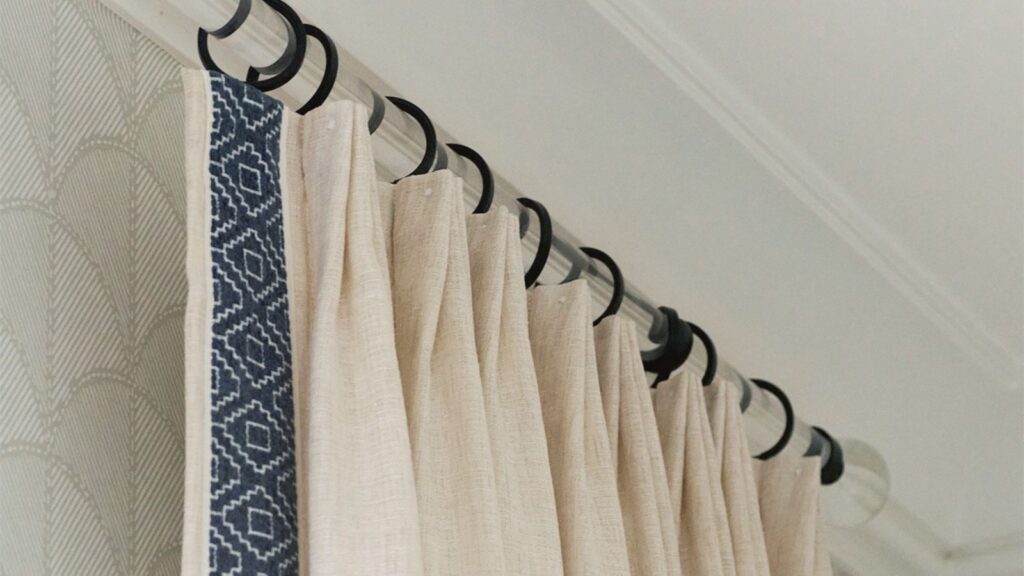
The details are back, and designers are specifying them seriously. Fringe, fretwork trims, scalloped edging, decorative banding. But I always tell designers that the embellishment is only as good as the foundation it sits on.
A banding detail on a beautifully fabricated drapery panel reads as designed. The same detail on a poorly constructed one reads as decoration trying to cover something up. We fabricate the foundation first and let the trim do its job.
Woven Woods and Natural Materials
Luxury clients increasingly want sustainable choices, but only when they meet their expectations for quality and finish. Woven wood shades sit right at that intersection.
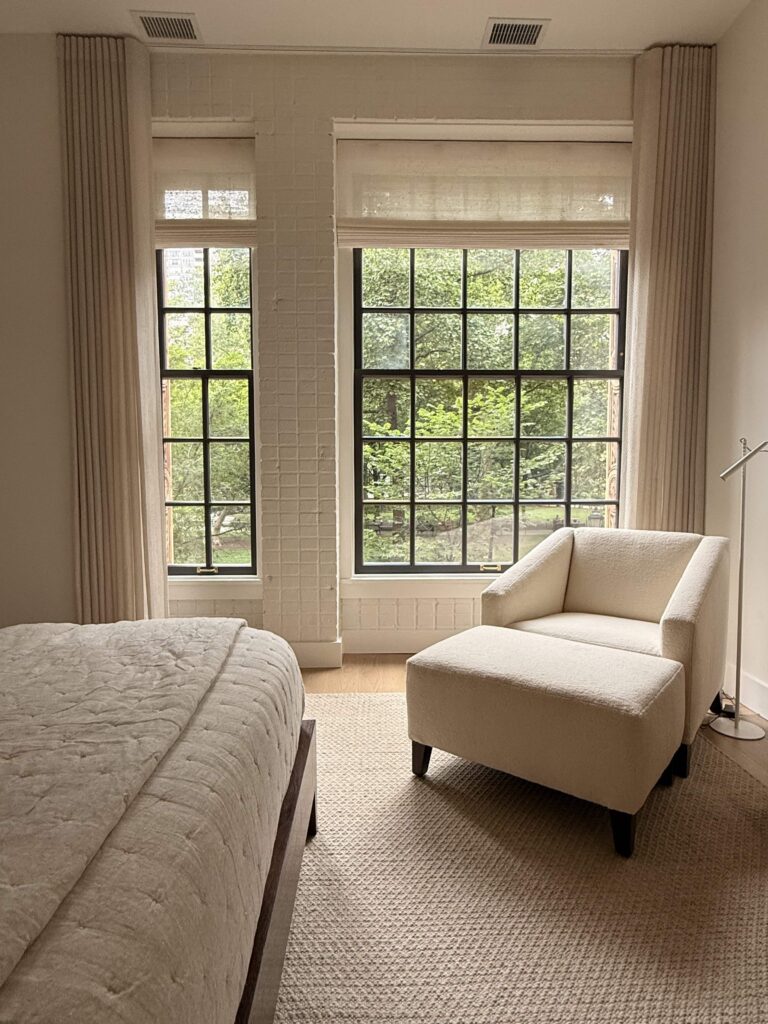
We covered woven woods as an emerging specification in our 2025 blog. A year later they’ve moved from a trend conversation to a standard in our studio. What’s evolved is the execution around them. The banding, the mechanism detail, the pairing with motorization. The material connects a room to the natural world in a way no synthetic can replicate. You don’t have to choose between sustainability and sophistication.
Automation
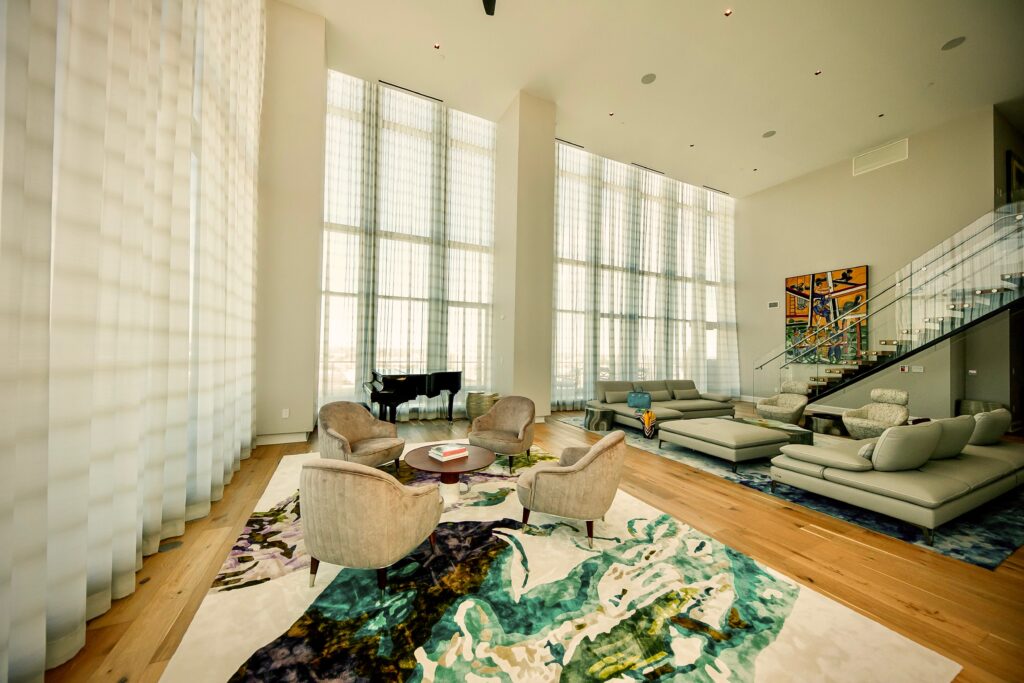
A year ago, motorization was still a conversation, something we discussed project by project. That conversation has shifted. Automated window treatments are showing up in far more of our residential and hospitality projects than in years past, a shift accelerated by our growing collaborations with AV integrators. They are no longer just an enhancement. They are increasingly essential and expected.
What has shifted is the range of entry points. Wand motorization has made automation accessible earlier in a project budget, while full smart home integration, programmable scenes, and energy efficiency are driving decisions at the high end.
Upholstery
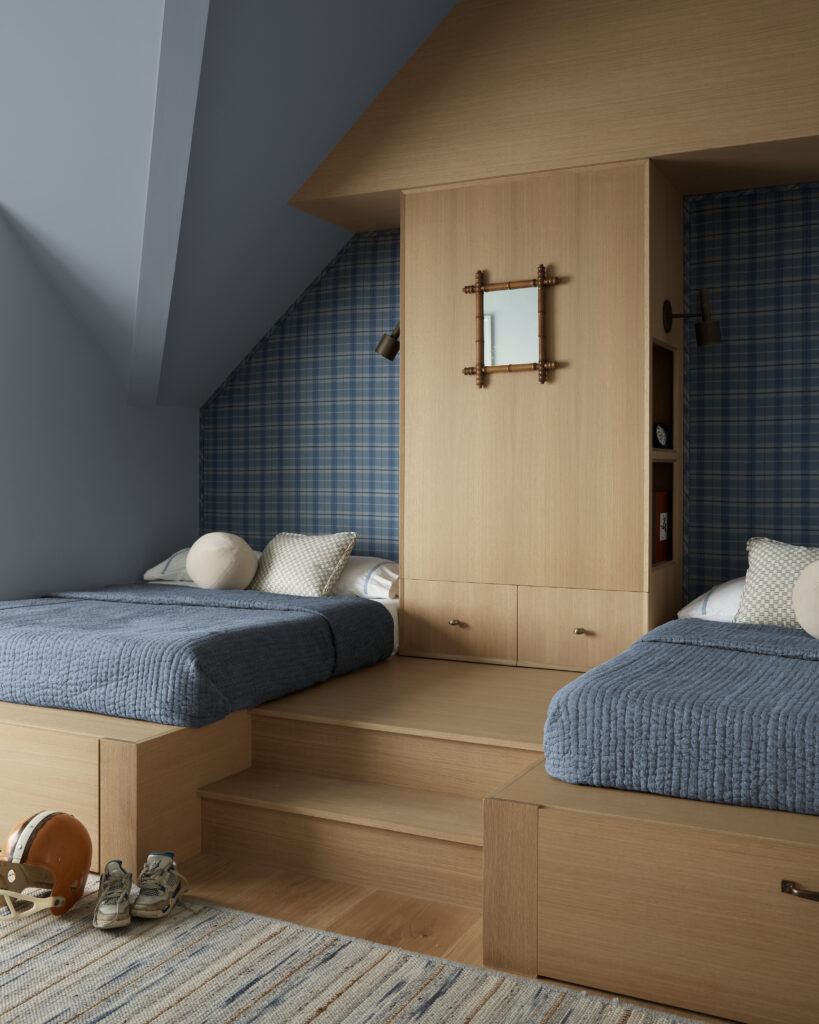
Upholstery is having a moment, and it has moved well beyond the sofa. Upholstered walls are showing up in the most talked-about interiors right now, not as an acoustic solution only, but as a full design statement.
For designers who already work with us on window treatments, this is a natural extension of what we do. The project below is a good example. We fabricated window treatments throughout this home, and also upholstered the walls behind the beds in the boys room. Same atelier, same construction standard, one fewer vendor to coordinate. That’s a conversation worth starting at the beginning of a project, not the end.
What Never Goes Out of Style
At Vitalia Inc., we know that beautiful design begins with great partnership. And while these trends offer real inspiration, what never goes out of style is custom craftsmanship, intelligent solutions, and exceptional service.
If you’re working through any of these treatments on a current project and want to talk through what’s achievable at the level your clients expect, we’d love to hear from you. Inquire today.

