
Automated window treatments are no longer a novelty. They’re an expectation in the luxury homes you design.
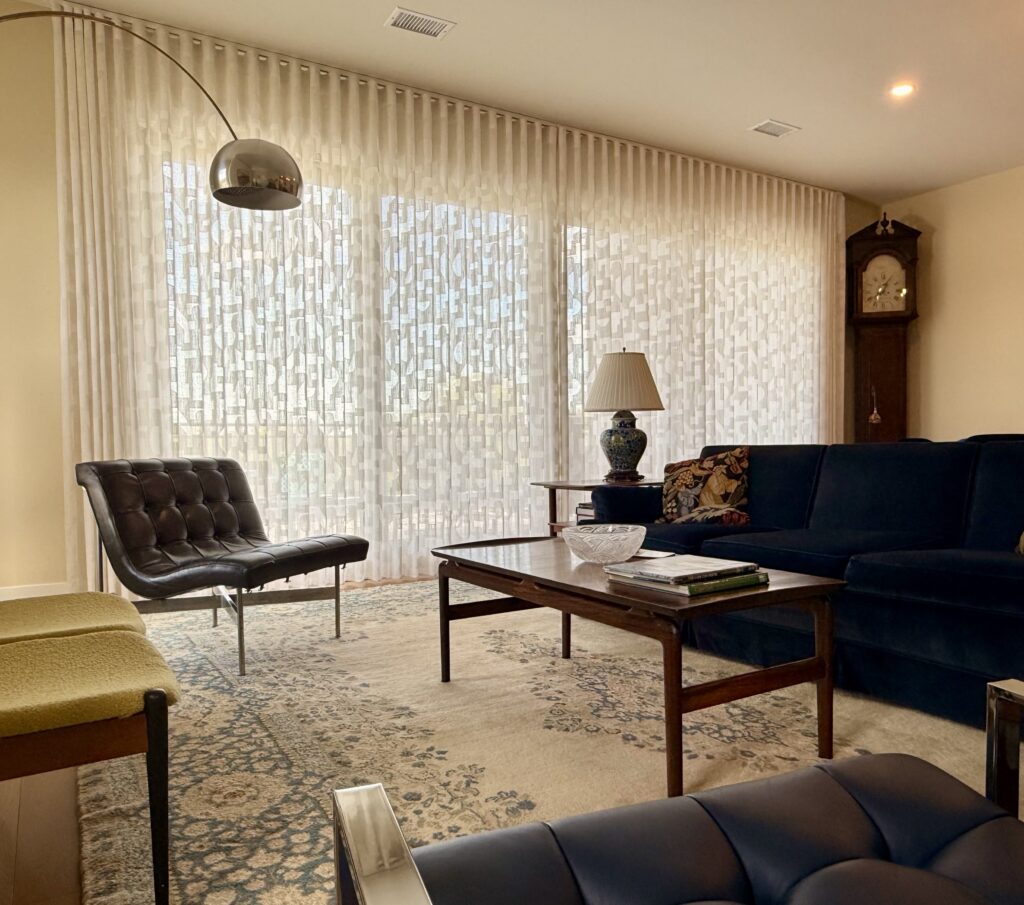
But as technology has evolved, so have the questions. In this two-part series, we’re answering the queries we hear most often from designers working at the highest levels of residential design.
Part One covers the technology, what’s possible, what can be automated, and how to set a project up for success from the start. And next month in Part Two, we’ll cover the lifestyle side, how automation elevates the daily experience of a luxury home and protects everything inside it.
What Designers Need to Know About Automated Window Treatments
Your clients are asking for it. Their architects and smart home integrators are building for it. And the homes you’re designing deserve a window treatment partner who understands exactly how it all works together. Here’s what you need to know so you can specify with confidence.
Can automated window treatments integrate with smart home systems like Lutron, Crestron, Control4, and Josh AI?
Yes, and this is one of the most compelling reasons to specify automated treatments from the start of a project. Today’s premier automation systems are designed to communicate seamlessly with the platforms your most discerning clients are already using. Whether the home runs on Lutron RadioRA, Crestron, Control4, or the increasingly popular Josh AI (a platform built specifically for the ultra-luxury residential market), automated window treatments can be incorporated as a fully integrated layer of the home’s ecosystem.
That means a single voice command, a tap on a keypad, or a scheduled scene can adjust every treatment in the home simultaneously. Sheers lift as the morning alarm goes off. Blackout drapery closes when a movie begins. It isn’t just convenient. It’s the kind of invisible, effortless living that defines a truly elevated home.
Beyond shades, what other window treatments can be automated?
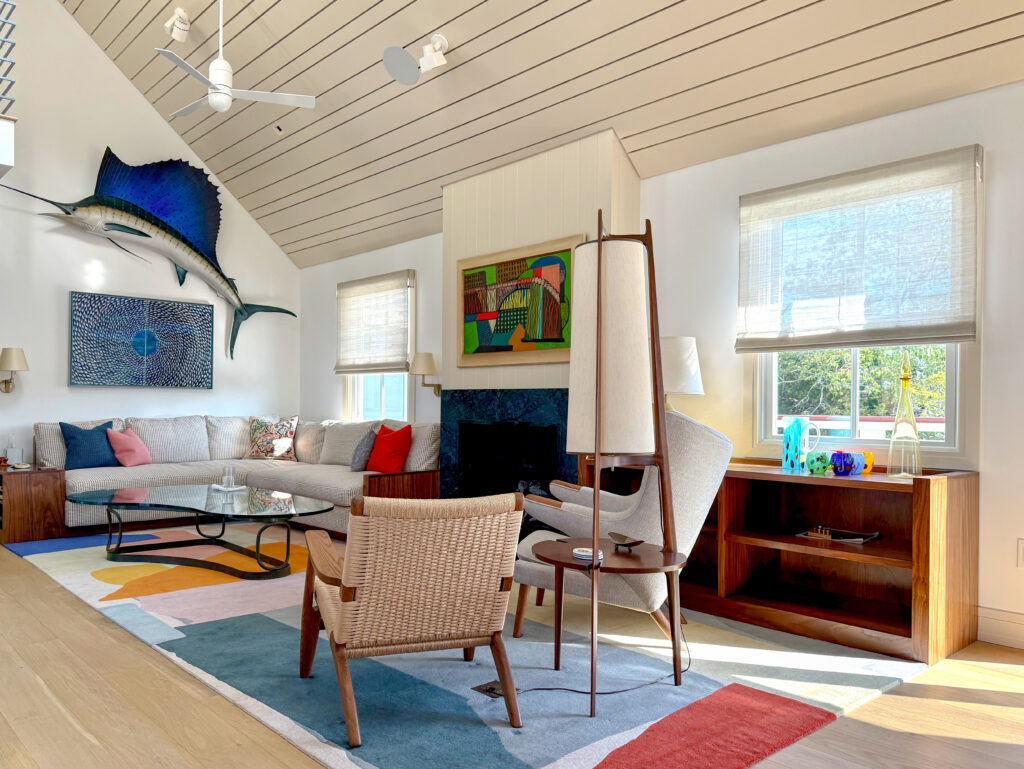
This is where many designers are surprised by what’s actually possible. Automation extends far beyond motorized shades and solar screens. At Vitalia, we work with the full range:
- Drapery Traversing drapery panels on automated tracks move with precision and whisper-quiet motors, no wand or cord required
- Roman shades A cleaner, more refined operation that preserves the tailored look without the hardware
- Exterior solar screens Automated retractable screens that manage heat, glare, and UV at the building envelope level
- Sliding glass door panels Large-scale panel systems that move effortlessly, ideal for open-plan spaces with floor-to-ceiling glass
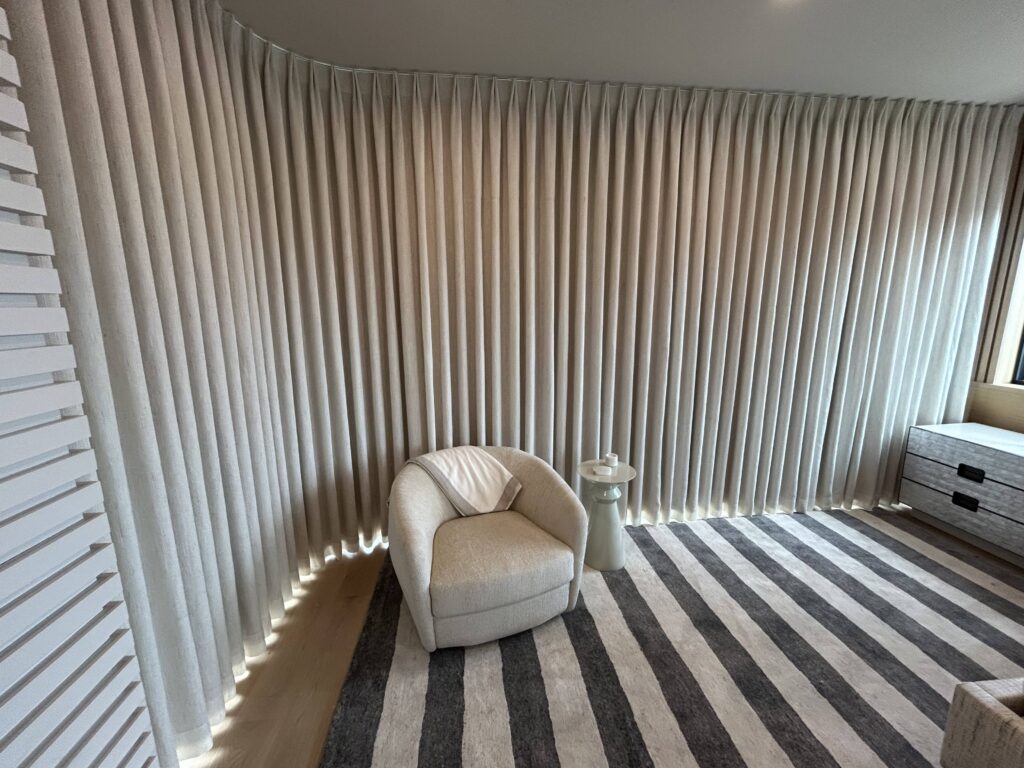
And yes, automated drapery can absolutely be executed on curved and specialty rods. We recently partnered with Home Innovations, a home integration company in Stone Harbor, New Jersey, on a project along the Jersey Shore where we installed automated drapery on a curved rod, fully integrated into the home’s smart system.
It was a stunning application, and one that reinforces what we’ve always believed. The right workroom partnership makes even the most technically ambitious projects feel completely seamless.
When in the design process should I bring in an automation specialist?
Early. Always early.
The ideal scenario is having us involved before the walls close. When we’re brought in during the construction or pre-construction phase, hardwiring can be planned and run exactly where it needs to go, with no compromises, no workarounds, and no visible hardware interrupting your finished design.
Hardwired systems are the gold standard, reliable, virtually maintenance-free, and completely hidden within the architecture of the home.
That said, we understand that projects don’t always unfold in a straight line. For renovations, phased builds, or homes where hardwiring simply isn’t available, there are excellent battery-operated and wireless solutions that have advanced significantly in recent years. Today’s battery systems offer extended life and quiet, consistent performance, and they can be retrofitted into existing spaces without disturbing finished walls, ceilings, or millwork. The aesthetic result is indistinguishable from hardwired. It simply requires a different maintenance conversation with your client.
The earlier you loop us in, the more options you have. But we’re equipped to meet a project wherever it is.
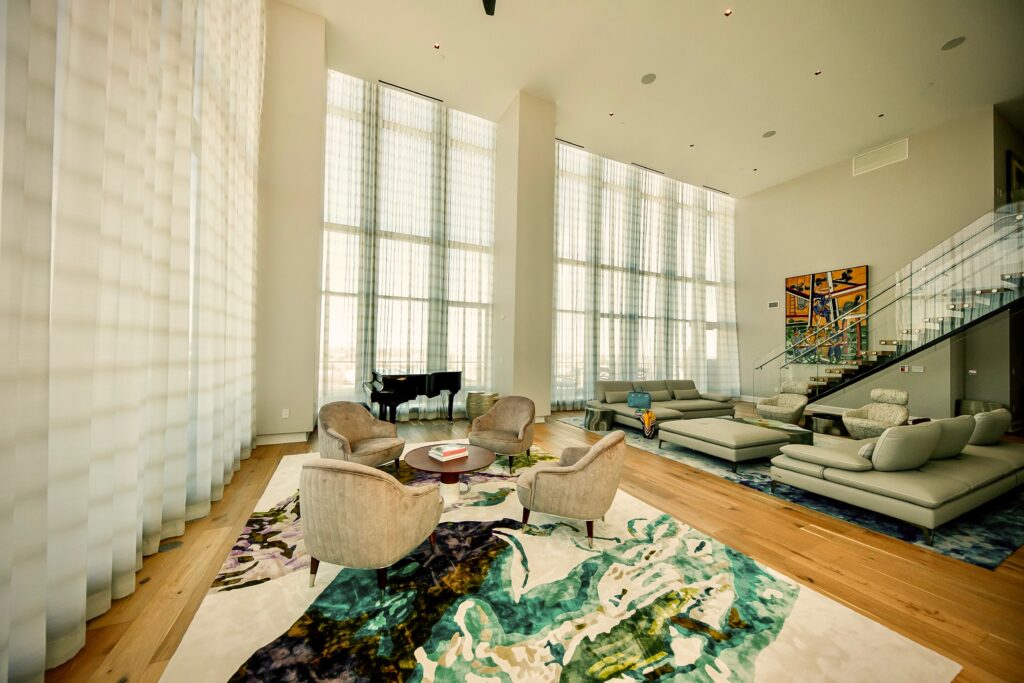
Part Two is coming soon. We’ll cover how automated window treatments change the daily experience of a luxury home, protect irreplaceable art and textiles, and why execution at this level requires a true specialist.
Have a project in mind already? Inquire here to start the conversation now.

